
Leave Your Message
Pioneering Microcrystalline Cellulose (MCC) applications tailored for industrial food manufacturing.

Advanced suspension technology for liquid dairy and plant-based milks.

Enhancing dough rheology and prolonging shelf-life in baked goods.

Improving texture, juiciness, and yield in processed meat applications.

Mimicking fat mouthfeel and optimizing vegan food structures.
In the contemporary landscape of food science and industrial manufacturing, Microcrystalline Cellulose (MCC) has emerged as an indispensable cornerstone for compound additive solutions. Originating from purified, partially depolymerized alpha-cellulose derived from specialized plant fibers, MCC represents a triumph of biochemical engineering. Its unique molecular structure allows it to function not merely as a single ingredient, but as a synergistic powerhouse when integrated into complex compound additive systems. The global food industry is undergoing a massive transformation, driven by consumer demands for clean-label products, reduced caloric intake, and enhanced organoleptic properties. In this demanding environment, MCC food-grade solutions provide unparalleled stability, texture modification, and moisture retention capabilities.
The commercial status of MCC in the food sector is characterized by exponential growth. As regulatory bodies worldwide, including the FDA and EFSA, continue to validate its safety profile (often designated as E460i), multinational food conglomerates are increasingly relying on MCC to solve intricate formulation challenges. Whether it is preventing phase separation in high-protein beverages, inhibiting ice crystal growth in premium ice creams, or acting as a non-caloric bulking agent in dietary supplements, the versatility of MCC is unmatched. However, the true potential of Microcrystalline Cellulose is unlocked only when it is formulated into Compound Additive Solutions. By combining MCC with other hydrocolloids—such as carrageenan, xanthan gum, or guar gum—food technologists can achieve a three-dimensional colloidal network that singular additives simply cannot replicate.
From an industrial perspective, the deployment of MCC compound solutions drastically optimizes manufacturing workflows. It exhibits remarkable thixotropic properties; meaning it gels at rest but flows smoothly under shear stress. This rheological behavior is highly advantageous during the pumping, filling, and packaging phases of industrial food production, reducing mechanical wear on factory equipment while ensuring the final product maintains its structural integrity from the factory floor to the consumer's table.
Nanchang Tellcan food Science Co., Ltd (hereinafter referred to as Tellcan Food), founded in 2001, is an excellent practitioner of compound food additives and food essence, specializing in the research and development, production and sales of food additives, and the research and development of food technology and food technology. Various types of compound food additives, edible essence and spices produced by Tellcan Food can be used in many fields such as food, beverage and dairy products.
Read moreAs we navigate the future of food technology, the intersection of Artificial Intelligence (AI) and food formulation is revolutionizing how Microcrystalline Cellulose compound additives are developed. Historically, creating the perfect hydrocolloid blend was a process of trial and error. Today, AI algorithms and machine learning models analyze vast datasets of rheological profiles, particle size distributions, and thermodynamic stability metrics to predict the exact synergistic ratios required for specific food matrices. Tellcan Science is at the forefront of this technological leap, utilizing advanced computational models to engineer MCC solutions that adapt dynamically to varying pH levels, temperatures, and processing conditions.
Let us dissect the deep application scenarios where MCC compound solutions demonstrate their profound industrial value:
1. Liquid Dairy and Plant-Based Alternatives: In the realm of neutral-pH beverages, such as UHT milk, chocolate milk, and the rapidly expanding market of oat, almond, and soy milks, phase separation and sedimentation are critical quality defects. An MCC-based compound solution creates a robust, invisible three-dimensional cellulose matrix. This matrix physically traps insoluble particles—like cocoa powder or plant proteins—preventing them from settling at the bottom of the carton. Furthermore, it imparts a rich, creamy mouthfeel to low-fat or plant-based milks, successfully mimicking the organoleptic properties of full-fat dairy without the associated caloric load.
2. Advanced Bakery Systems: In industrial baking, staling and moisture migration drastically reduce shelf life. When MCC is incorporated into dough conditioners as a compound additive, it acts as a superior moisture-binding agent. During the baking process, the cellulose microcrystals distribute evenly throughout the gluten network, interfering with starch retrogradation. This results in baked goods that remain soft, moist, and structurally sound for extended periods. Additionally, in extruded snacks and gluten-free formulations, MCC provides the necessary structural scaffolding that is typically lost when gluten is removed.
3. Processed Meat and Savory Products: The meat processing industry faces constant pressure to reduce fat content and production costs while maintaining juiciness and bite. MCC compound solutions act as exceptional fat mimetics and water binders in sausages, patties, and emulsified meats. By retaining water during the high-heat cooking process, MCC significantly improves the cooking yield. Its microscopic particulate nature mimics the lubricity of animal fat, ensuring that low-fat meat alternatives do not suffer from a dry or rubbery texture.
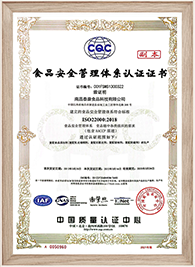
The company has implemented and maintains the HACCP 22000 Food Safety Management System, ensuring reliable products and services. To date, Tellcan has resolved technical challenges for thousands of domestic enterprises and earned prestigious recognitions.
 Council Member of China Food Additives Production and Application Industry AssociationStanding Council Member of Jiangxi Food Additives AssociationMember of China Dairy Products Industry AssociationMember of China Bakery & Confectionery Supplementary Materials Industry AssociationMember of China National Federation of Industry & Commerce Bakery AssociationPremium Products & Global Sourcing



Looking toward the horizon, the evolution of Microcrystalline Cellulose is intrinsically linked to the broader trends of sustainability and nanotechnology. The next frontier in compound additive solutions is the commercialization of Nanocrystalline Cellulose (NCC) and Microfibrillated Cellulose (MFC). These highly advanced iterations of MCC possess surface areas exponentially larger than traditional microcrystals, allowing for unprecedented emulsion stability and film-forming capabilities at drastically lower usage levels. By integrating AI-assisted manufacturing techniques, producers can precisely control the hydrolysis process to yield cellulose particles with exact morphological specifications, tailoring them for highly specialized applications such as 3D food printing and smart packaging.
Furthermore, the environmental impact of food additives is under intense scrutiny. The beauty of Microcrystalline Cellulose lies in its inherent sustainability. As a derivative of abundant plant biomass—often sourced from sustainably managed forests or agricultural byproducts—MCC represents a circular economy approach to food chemistry. Unlike synthetic emulsifiers or petroleum-derived additives, MCC is fully biodegradable and biocompatible. Tellcan Science is deeply committed to this ecological mandate, ensuring that the raw materials utilized in our compound solutions meet stringent environmental certifications. By optimizing our extraction and purification processes, we significantly reduce water and energy consumption, aligning our high-tech solutions with global carbon-neutrality goals.
In conclusion, Microcrystalline Cellulose is not just a passive ingredient; it is an active, dynamic component that dictates the physical and sensory success of modern food products. Through the lens of compound additive solutions, MCC resolves the multifaceted challenges of texture, stability, and shelf-life. As AI and advanced material sciences continue to push the boundaries of what is possible, Tellcan Science remains dedicated to engineering the next generation of MCC systems. We empower food manufacturers to innovate fearlessly, secure in the knowledge that our structural solutions will deliver flawless quality, bite after bite, sip after sip.
Integrating our MCC compound solutions across diverse global industrial platforms.


